
Gelato vs. Ice Cream: Compare Texture, Serving, and Labels
On this page
Quick answer
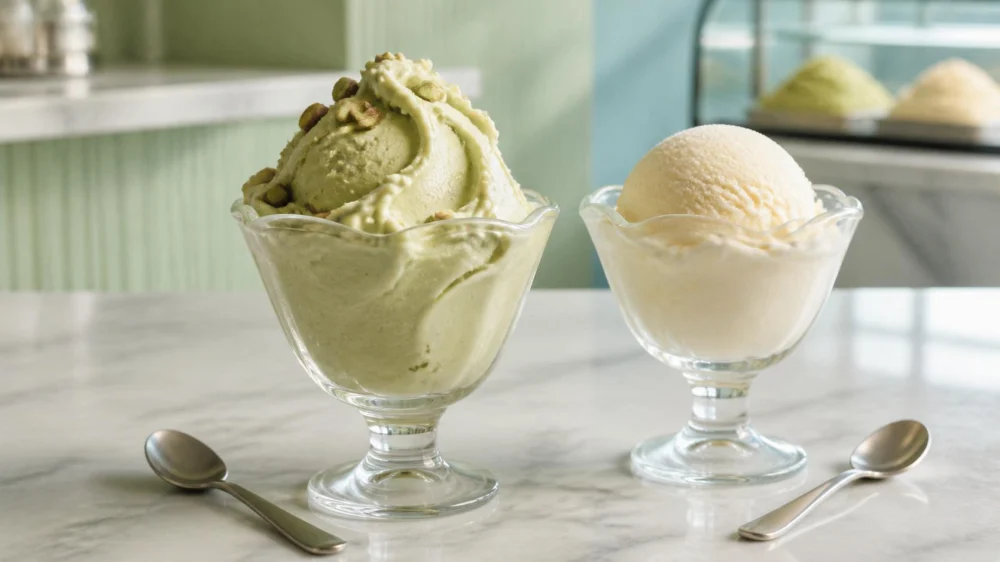
Gelato and ice cream are both frozen desserts, but shops may formulate and serve them differently. Gelato is often made with proportionally more milk and less cream, churned to incorporate less air, and served slightly warmer for a dense, soft texture. Ice cream often contains more cream and air and is served colder. The exact product and label matter more than the name alone.
Neither choice is automatically dairy-free, lower in sugar, lower in calories, or safer for allergies. Compare the ingredient statement, serving size, nutrition facts, and shop’s cross-contact practices for the exact flavour.

Graeter's Ice Cream / graeter's buttermilk
Fort MitchellKenton CountyKentucky
301 Buttermilk Pike, Fort Mitchell, KY 41017, USA
Recipe and legal labels
In the United States, products sold under a standardized food name such as “ice cream” must meet applicable federal identity requirements. “Gelato” is commonly used as a style term, and recipes vary by maker.
Both may contain milk, cream, sugar, egg, stabilizers, emulsifiers, cocoa, nuts, fruit, or flavour preparations. Vegan or non-dairy versions use different bases and should be evaluated by their own labels.

Plush Horse Palos Park / plush horse palos
12301 S 86th Ave, Palos Park, IL 60464, USA
Air and texture
Churning traps air. Less incorporated air usually creates a denser spoonful; more air can make a product lighter and quicker to melt on the tongue. Freezing equipment, recipe solids, stabilizers, storage, and serving technique also affect texture.
Dense does not mean heavier in every nutrition comparison because serving sizes may be listed by volume or weight. Compare grams as well as cups.
Serving temperature
Gelato is often displayed and served warmer than hard-packed ice cream. Warmer frozen dessert feels softer and releases aroma quickly. Colder ice cream can feel firmer and may retain structure longer in a cone.
Serving temperature is not a food-safety permission to leave products unrefrigerated. Shops must hold and handle frozen desserts with appropriate equipment. At home, return pints to the freezer promptly and avoid repeated melting and refreezing.
How flavour changes
A warmer, denser product can make nut, chocolate, coffee, or fruit notes feel immediate. A colder, cream-rich product may deliver flavour more gradually and create a lingering dairy finish. Sweetness perception also changes with temperature.
Taste plain or delicate flavours before intense, bitter, minty, or heavily textured ones. Drink water between samples and judge a full spoonful rather than only the first cold impression.
Compare nutrition accurately
Read the serving size, weight, calories, saturated fat, added sugars, protein, and allergens on packaged products. A smaller listed serving can make numbers appear lower without making the food nutritionally different.
At a shop without packaged labels, ask whether nutrition and ingredient information is available. Choose portions and frequency that fit your needs rather than relying on the word gelato as a health claim.
Questions at the shop
- Is this flavour made onsite or supplied packaged?
- What dairy, egg, nut, gluten, soy, or other allergens does it contain?
- Are scoops and tubs shared between flavours?
- Which options are fruit-forward, cream-forward, dense, or light?
- Can I see the ingredient or nutrition information?
- Which size matches the portion I want?
Choosing checklist
- Choose by desired density, temperature, and flavour.
- Read the exact label rather than relying on the category name.
- Compare servings by both volume and weight.
- Ask about allergens and shared equipment.
- Start with delicate flavours when tasting several.
- Transport take-home products in an insulated bag.
- Freeze promptly and avoid repeated softening.
Frequently asked questions
Is gelato always lower in fat?
Often, but not always. Check the exact recipe or nutrition facts.
Does gelato contain less air?
Traditionally it often does, but production varies.
Is gelato dairy-free?
Usually not. Look for a clearly labelled non-dairy product and verify ingredients.
Why is gelato softer?
Recipe, air content, and warmer serving temperature all contribute.
Which melts faster?
Serving temperature, recipe, air, room conditions, and portion shape all matter.
Which is healthier?
No category wins automatically. Compare the product, portion, and your dietary needs.
Sources and evidence notes
Packaged ingredient statements and Nutrition Facts panels are the primary sources for a specific product. U.S. standardized food names are governed by federal food-labeling rules, while shop recipes and style terms can vary.
For allergy decisions, obtain the exact ingredient information and ask about shared scoops, tubs, preparation surfaces, and equipment. A style name is not an allergen guarantee.
Conclusion and next steps
Choose gelato for a typically dense, softly served experience and ice cream for a typically colder, creamier range of textures—but judge the actual product. Read labels, compare equal serving weights, ask about cross-contact, taste delicate flavours first, and keep take-home desserts properly frozen.



 Kreamy Korner4.0 (21 reviews)
 JB's Barnyard Ice Cream5.0 (183 reviews)
 Magic Twist Shop4.0 (14 reviews)
 Carvel4.0 (257 reviews)
 Ralph's Italian Ices5.0 (6 reviews)
 Dixie Dairy Dreem4.0 (587 reviews)
 How to Make Ice Cream with Pitaya (Dragon Fruit) for a Vibrant Pink
 Best Ice Cream Shops in Albuquerque for Green Chile Chocolate Swirls
 Best Ice Cream Shops in Nantucket for Massachusetts Whaling History
 Why Ice Cream is the Perfect Dessert for Every Season
 What Is Butterbeer Ice Cream and How to Make It Harry Potter Style
 Ice Cream and Identity: How Ice Cream Reflects Personal and Cultural Tastes