
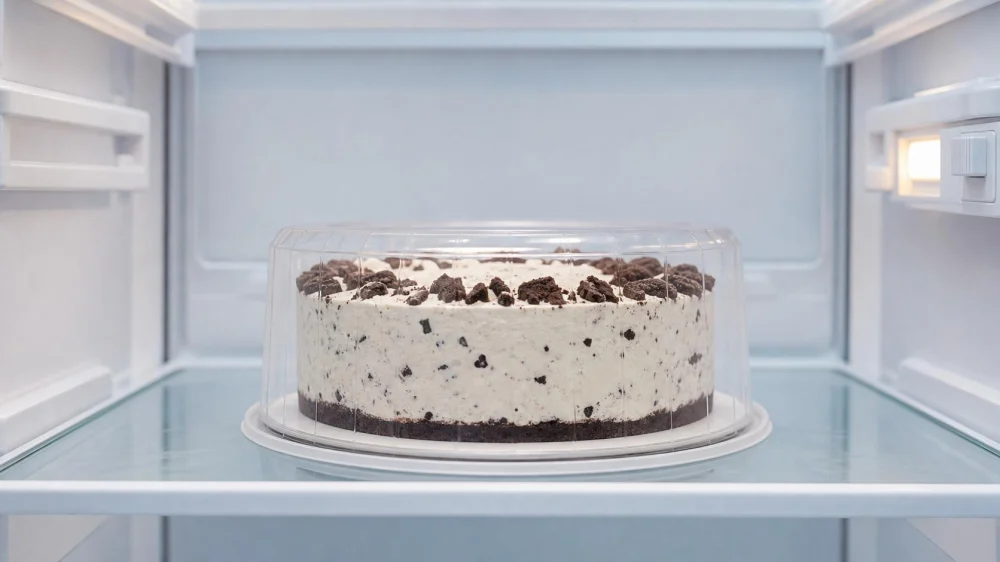
How to Store an Ice Cream Cake Before Serving It
On this page
Quick answer
Keep an ice cream cake frozen, level, covered, and protected from crushing and strong freezer odors. Clear a flat shelf before pickup, follow the shop's storage and softening instructions, and move the cake out only when the serving area, knife, plates, and guests are ready. Return leftovers promptly in an airtight container; do not repeatedly soften and refreeze the whole cake.

Cranberry Junction Homemade Ice Cream / cranberry junction homemade ice cream
HackensackBergen CountyNew Jersey
19 Temple Ave, Hackensack, NJ 07601, USA
Get product-specific instructions
An ice cream cake can contain ice cream, cake layers, cookies, fudge, whipped topping, frosting, fruit, nuts, or decorative pieces. Those components soften and cut at different rates. A universal counter time cannot account for every recipe, size, freezer, room, or weather condition.
Before leaving the shop, ask:
- How long can the boxed cake remain in the provided transport setup?
- Should it go directly into a freezer on arrival?
- How and when should this specific cake be softened for cutting?
- Should any topper, dry ice, candle holder, or non-edible support be removed first?
- How should leftovers be wrapped and how long does the shop recommend keeping them?
- Which ingredients and cross-contact risks can the shop verify?
Keep the product label, receipt, and written care instructions. If verbal guidance differs from printed instructions, ask staff to clarify before departure.

Häagen-Dazs / haagen dazs tysons
7889 Tysons Corner Center Space 9FU, McLean, VA 22102, USA
Prepare flat freezer space
- Measure first. Check the cake box dimensions and compare them with the shelf, doorway, and drawer clearance.
- Clear a stable shelf. Do not balance the box on wire edges, loose packages, or an overfilled drawer.
- Level the surface. A tilted cake can slide, crack, or press into one side of the box as it softens.
- Keep airflow in mind. Avoid blocking vents or packing warm items tightly around the cake.
- Separate strong odors. Seal fish, onions, garlic, and other aromatic foods. Ice cream and frosting can pick up freezer odors.
- Check the freezer. Confirm it is operating normally before pickup. Do not trust a compartment that is softening other frozen foods.
If the home freezer cannot fit the box, arrange appropriate storage before buying. Removing a cake from its protective base or box just to force it into a small space can damage decoration and expose it to odor and dehydration.
Protect the cake and packaging
Keep the cake on its rigid base and inside the shop's box unless instructions say otherwise. The base supports transfer, while the box protects decoration from contact and reduces exposure to moving freezer air.
Do not place heavy food, ice trays, or containers on top. Keep the cake away from loose packages that may fall when the door opens. If the box is not sealed and storage will be extended, ask the seller whether an outer food-safe wrap is appropriate; wrapping directly against frosting can pull away decoration.
Moisture on the outside of the box can weaken cardboard. Keep it away from freezer drips and do not set a damp transport container on the shelf. If dry ice was supplied, follow every shop warning, ventilate the vehicle, avoid bare-skin contact, keep it away from children and pets, and never place it in a sealed airtight container.
Plan softening and serving
Work backward from the serving time. Prepare the table, plates, utensils, knife, napkins, candles, and camera before moving the cake. Ask guests to gather first so the cake does not sit out while people are found.
Use the seller's timing and method for this product. Some cakes cut best after a short refrigerator or counter rest; others require very little softening. Room temperature, cake size, frozen inclusions, and frosting all change the result. Set a timer rather than estimating from appearance alone.
Keep the cake away from sunlight, ovens, grills, hot serving dishes, heating vents, and warm outdoor surfaces. For an outdoor event, identify a shaded serving point and keep the cake frozen until the group is ready.
Add candles only immediately before the celebration. Remove non-edible decorations, picks, supports, packaging films, and dry-ice materials according to instructions. Never insert candles through hidden hard decorations or supports.
Cut and serve efficiently
- Place the cake on a stable, dry, food-safe surface.
- Confirm every non-edible item has been removed or identified.
- Use a long, sturdy knife suitable for the cake. Keep children away from the cutting area.
- If the shop recommends warming the blade, use warm water, then wipe it completely dry before each cut. Do not leave water pooling on the cake.
- Make decisive vertical cuts rather than sawing through the box base.
- Serve modest pieces first; guests can request more.
- Move remaining cake back toward frozen storage as soon as practical.
A knife that will not pass safely is a sign the cake may need more of the recommended softening time. Do not force the blade, strike it, or hold the cake with fingers in the cutting path.
Handle leftovers safely
Before serving, set out a freezer-safe container or prepare food-safe wrap so leftovers can be protected quickly. Smaller portions freeze faster and avoid softening the entire cake again when one piece is wanted.
- Return pieces to the freezer promptly after serving.
- Use clean utensils and avoid handling pieces that have been on individual plates.
- Cover cut surfaces to reduce drying and odor pickup.
- Label the container with the product and storage date without writing on the food.
- Follow the shop's recommended storage period and allergen information.
If the cake has fully melted, remained warm for an uncertain period, contacted an unclean surface, or contains ingredients with special handling needs, do not simply refreeze it and assume it is safe. Ask the seller or an appropriate food-safety authority for guidance; discard it when safety cannot be established.
Limitations and evidence notes
This guidance reflects general frozen-dessert storage and serving practice. Recipe, size, packaging, freezer performance, transport method, and ingredients vary across ice cream shops in the United States. The product label and seller's current instructions are the primary evidence for a specific cake.
Appearance and firmness alone cannot confirm food safety. Home freezers may cycle or have warm door zones, and power outages change storage conditions. Follow official local food-safety guidance during an outage or when illness risk is a concern. People with food allergies should rely on verified ingredient and cross-contact information rather than decoration or flavor names.
Frequently asked questions
Can I store an ice cream cake in the refrigerator?
Usually only for a short, product-specific softening period if the shop directs it. A refrigerator is not a substitute for frozen storage and can allow the structure to collapse.
How long should the cake sit out before cutting?
Use the seller's instruction for that cake. Size, recipe, freezer, and room temperature make a universal number unreliable. Start a timer and check at the recommended point.
Can I remove the cake from its box in the freezer?
Keeping it boxed usually protects the surface and decoration. Remove packaging only if the product instructions require it or if the seller provides a better approved storage method.
What if the cake is too hard to cut?
Stop forcing the knife. Follow the recommended additional softening method, keep the cake level, and try again with a suitable clean blade. Do not use impact or place fingers near the blade path.
Can I refreeze leftover slices?
Return slices promptly when they have only undergone the intended serving period and remain suitable under the product guidance. Do not repeatedly soften and refreeze them, and do not refreeze cake that was warm for an uncertain time.
Conclusion and next steps
Measure freezer space before pickup, keep the cake level and protected, and follow product-specific softening directions. Prepare the entire serving setup before opening the freezer, cut safely, and return covered portions promptly. When storage time, temperature, allergens, or product condition is uncertain, ask the shop instead of guessing.

 Kettlewell's4.0 (31 reviews)
 Reedsville Creamery Ice Cream Stand4.0 (115 reviews)
 The Snack Shack4.0 (560 reviews)
 Piñas Locas4.0 (25 reviews)
 Charlie & Munco’s4.0 (29 reviews)
 Kohr Brothers Frozen Custard4.0 (88 reviews)
 Best Ice Cream Shops in Branson for Missouri Ozark Hillbilly Themes
 How to Get the Perfect Scoop Every Time: Ice Cream Tips from the Pros
 How to Make Ice Cream with Feijoa for a New Zealand Pineapple Guava Twist
 What Is Birthday Cake Ice Cream and How to Make It at Home
 How to Make Ice Cream with Camu Camu for the Highest Vitamin C Content
 Ice Cream Parlor Secrets: How the Best Ice Cream Shops Make Their Treats