
Why Ice Cream Gets Freezer Burn and How to Prevent It
On this page
Quick answer
Ice cream develops freezer burn when moisture leaves exposed areas and temperature changes let larger ice crystals grow. Store it tightly covered in the coldest stable part of the freezer, not the door; minimise air space; use clean utensils; and return it promptly after serving. Freezer burn mainly damages texture and flavour, but melted or mishandled ice cream may present a separate food-safety concern.

What freezer burn is
Freezer burn is surface dehydration and oxidation that occurs when frozen food is exposed to dry freezer air. On ice cream, it can look like pale dry patches, a frosty layer or coarse crystals and may create a stale, papery or less creamy taste.
Freezer burn is not the same as every ice crystal. Small crystals are part of frozen dessert structure. The unpleasant texture appears when moisture migrates, sublimates or repeatedly melts and refreezes into larger crystals.
Whistle Stop Ice Cream Caboose / ice cream howell mi
HowellLivingston CountyMichigan
2385 E Grand River Ave, Howell, MI 48843, USA
Why ice crystals get larger
- Air exposure: a loose lid or partially empty tub gives moisture more opportunity to move.
- Temperature cycling: freezer-door storage, frequent opening or a struggling freezer can soften and refreeze the surface.
- Long serving time: leaving the container on a warm counter softens edges before it goes back.
- Warm utensils: repeated dipping can locally melt the product and introduce crumbs or moisture.
- Large headspace: as a pint empties, more air remains above the ice cream.
- Power interruption: partial thawing followed by refreezing changes texture and may create a safety question.
Best storage: a consistently cold freezer zone with the package tightly closed. Not ideal: the freezer door, an overfilled compartment that blocks airflow, or repeated soften-and-refreeze cycles.
Better storage steps for an opened container
- Check the freezer. Follow appliance guidance for safe freezer temperature and do not block vents.
- Flatten the surface. After scooping, level large ridges so there is less exposed surface area.
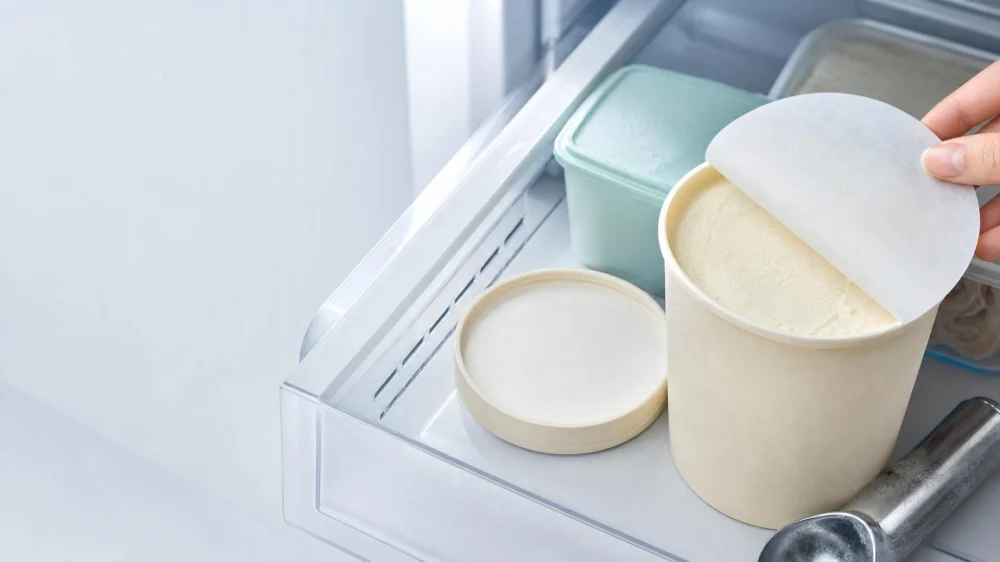
- Create a closer barrier. If the package maker permits it, place food-safe wrap or parchment directly over the surface before replacing the lid. Do not use material that tears into the dessert.
- Close the lid completely. Wipe the rim clean so the lid seats properly.
- Use a smaller freezer-safe container. When much of the tub is gone, transferring the remainder can reduce headspace, but use a clean container with a tight lid and label it.
- Store deep inside. Choose a stable shelf toward the back, away from the door and strong-smelling uncovered foods.
- Mark the date. Follow the manufacturer’s storage guidance and use older opened containers first.
A smarter serving routine
Plan portions before the tub warms. Let very firm ice cream sit only as long as needed under safe food-handling conditions, then use a clean sturdy scoop. Portion into bowls and return the main container to the freezer promptly rather than leaving it out through dessert.
Do not run a scoop under hot water and put it into the tub while dripping. Dry it thoroughly first. Avoid eating directly from a shared container because saliva and crumbs contaminate the remaining product.
For a gathering, divide ice cream into smaller service containers while keeping the reserve frozen. Follow food-safety time and temperature guidance, especially outdoors or in hot weather.
Freezer burn, spoilage and safety are different
Freezer-burned ice cream may be unpleasant but the dry patches alone do not prove it is unsafe. However, discard the product if it has been left at unsafe temperatures, fully melted without controlled handling, contaminated by a dirty utensil, affected by an uncertain power outage or showing mould, damaged packaging or an unexplained off odour.
Do not use appearance alone to judge thawed dairy or egg-containing dessert. When timing or temperature is unknown, follow authoritative food-safety guidance and choose the safer option. People at higher risk of foodborne illness should be especially cautious.
Buying a take-home container from a local shop
Ask whether the shop uses tamper-evident packaging, how long the product can travel and whether an insulated bag or ice pack is recommended. Take the dessert directly home, keep it separate from warm food and freeze it promptly. For hand-packed containers, ask for the flavour and packing date to be marked.
Ice Cream Shop is a discovery resource and does not guarantee a store’s handling. Verify current ingredients, allergen controls, storage instructions and pickup timing directly with the business.
Sources and evidence notes
This guide reflects basic frozen-food science, appliance guidance and common food-safety practice: limit air exposure, maintain a stable cold temperature and prevent contamination. Exact shelf life, safe handling and packaging directions depend on the product and manufacturer. Official food-safety guidance takes priority.
Frequently asked questions
Can I scrape off freezer burn?
You can remove a small dry surface patch for quality, but the remaining texture may still be coarse. Scraping does not make temperature-abused ice cream safe.
Does turning the container upside down help?
Some people suggest it to move meltwater, but leaks and contamination are possible. A tight lid, surface barrier and stable cold shelf are more predictable.
Why is my ice cream soft in the freezer?
Recipe, alcohol or sugar content can affect firmness, but unexpected softness may also indicate freezer temperature or airflow problems. Check the appliance according to its manual.
Can I refreeze melted ice cream?
Texture will suffer, and safety depends on time, temperature and contamination. Use authoritative food-safety guidance; discard it when conditions are uncertain.
Does a frost-free freezer cause more crystals?
Automatic defrost cycles can contribute to temperature changes, especially near the door. Store ice cream deep inside and keep the package sealed.
Conclusion and next steps
After each serving, level the surface, add an approved close barrier, seal the lid and return the container to a stable cold shelf. Keep utensils clean and serving time short. Treat freezer burn as a quality problem, while using separate food-safety rules for thawing, contamination and power outages.


 Gio’s Gelato & Espresso Bar4.0 (117 reviews)
 Sharon Dairy King4.0 (376 reviews)
 Dell's Sundae Grill4.0 (355 reviews)
 Dalzell Dairy4.0 (48 reviews)
 Cold Stone Creamery3.0 (128 reviews)
 Flamingo Ice Cream4.0 (17 reviews)
 Ice Cream and Pop Culture: References in Songs, TV, and Books
 Best Ice Cream Shops in Bristol for Rhode Island Portuguese Influence
 How to Make Vegan Ice Cream That Tastes Amazing
 What Is Coffee Ice Cream and the Best Brands for Caffeine Lovers
 Best Ice Cream Shops in Fairbanks for Alaska Aurora Borealis Themes
 Best Ice Cream Shops in Seattle for Coffee-Infused Scoops