
Ice Cream Shop With Kids: Portions, Melt, and Cleanup
On this page
Quick answer
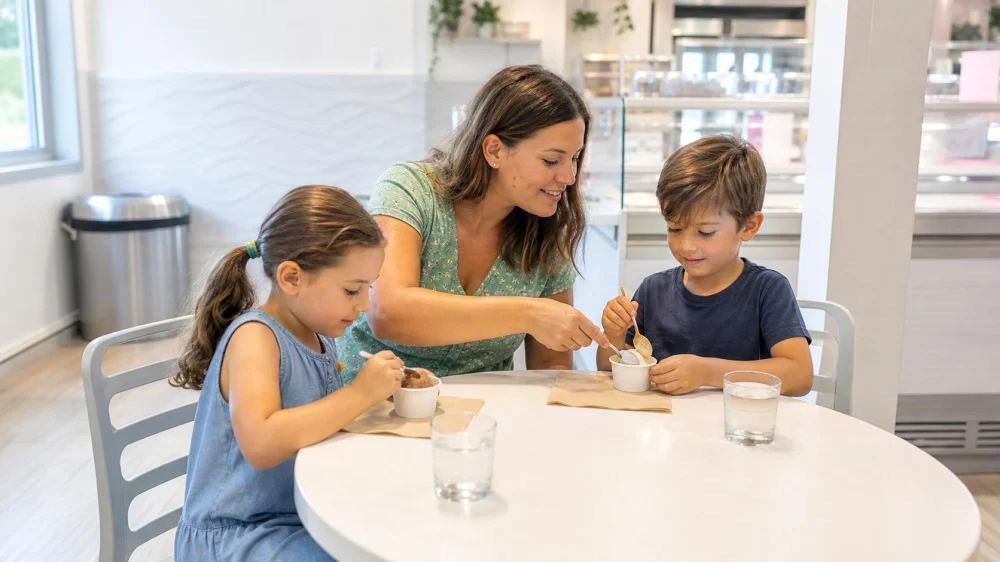
For a calmer ice cream shop visit with children, check allergens and seating first, let each child choose from a short set of appropriate options, and start with a small cup that can be carried safely. Sit before unwrapping spoons, keep water and napkins ready, and handle melting early. Supervise eating, especially with hard mix-ins, cones, toothpicks, or other choking and injury hazards.

Icy Delights - Parkville / icy delights parkville
ParkvilleBaltimore CountyMaryland
2501 Putty Hill Ave, Parkville, MD 21234, USA
Plan before ordering
Review the current menu and ingredient process for the exact shop. Decide whether the visit fits the child’s usual food plan, allergies, sensory needs, and schedule. Busy queues, loud machines, heat, and limited toilets can make a spontaneous stop harder than expected.
- Confirm shop and seating hours
- Ask about ingredients and shared scoops before samples
- Find a clean table and clear route before carrying food
- Use handwashing or an appropriate clean-hands routine
- Choose a shaded or indoor seat in hot weather
- Set the rule for samples, toppings, and one final choice
Choose manageable portions
- Use the smallest practical size. A child portion or split serving may reduce melt and waste.
- Prefer a cup for beginners. It contains drips and can rest on a table; a cone demands continuous handling.
- Limit mix-ins. Whole nuts, hard sweets, large chunks, and sticky pieces may be inappropriate for younger children.
- Keep flavours recognisable. Too many swirls and toppings make it harder to identify an ingredient if a reaction occurs.
- Ask for toppings on the side. The child can add a small amount and keep texture from overwhelming the serving.
- Carry adult-first. An adult transports full cups or cones through the queue and hands them over at the table.
Set up the eating space
Seat children securely without blocking aisles or using a chair as a climbing platform. Place cups away from edges, open spoons at the table, and keep napkins and water within adult reach. Tie back loose hair and remove coats or bags that could catch the table.
Watch the pace and temperature of each bite. An “ice cream headache” is uncomfortable but usually brief; pause eating and let the mouth warm naturally. Do not encourage speed to beat melting.

Rita's Italian Ice & Frozen Custard / rita's browns mills nj
Pemberton TownshipBurlington CountyNew Jersey
21 Juliustown Rd, Browns Mills, NJ 08015, USA
Finish and clean up
When melting outpaces eating, ask for a lid if available, discard the remainder, or use the shop’s approved take-home option. Do not save a partly eaten melted dairy serving for later without safe cold storage.
Wipe hands and faces gently, clear the table as the venue requests, and check under chairs for spoons and wrappers. Report a spill promptly so no one slips. Wash sticky reusable items at home rather than in a public drinking-water fixture unless permitted.
Limitations and safety notes
Parents and caregivers must choose foods appropriate to a child’s age, development, allergies, and medical needs. Shop staff cannot guarantee an allergy-safe product unless their documented process supports it. Carry prescribed emergency medication and know the response plan.
Seek emergency help for breathing difficulty, facial swelling, collapse, or another severe allergic reaction. A child should remain supervised in parking areas and queues as well as at the table.
Sources and evidence notes
The plan uses common family food-safety principles: age-appropriate portions and textures, direct allergen communication, seated supervised eating, hand hygiene, temperature control, and prompt spill cleanup. The caregiver and current shop information guide the visit.
Frequently asked questions
Is a cone or cup better for a young child?
A cup is often easier to set down and contain, while a cone requires continuous handling. Choose for the child and conditions.
Can siblings share one cup?
Sharing may reduce waste but can spread illness and confuse allergens. Use separate spoons and a suitable serving plan.
Are sample spoons safe for allergies?
They do not prevent cross-contact from shared tubs and scoops. Ask the shop about its full process.
What should I do with leftovers?
Unless a shop packs a fresh take-home product for immediate cold transport, discard melted or partly eaten leftovers rather than carrying them warm.
Next steps
Check the shop’s allergen process and seating, narrow choices before the counter, order a small cup, and sit before eating. Keep water and napkins ready, supervise textures and pace, and discard melting leftovers safely.



 Whitey's Ice Cream4.0 (1472 reviews)
 Dairy Delite & Grill4.0 (315 reviews)
 Zitas Homemade Ice Cream4.0 (640 reviews)
 Dairy Queen (Treat)4.0 (543 reviews)
 Baskin-Robbins3.0 (49 reviews)
 Rita's Italian Ice & Frozen Custard4.0 (133 reviews)
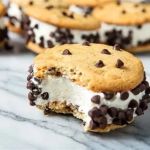 代码Ice Cream Sandwiches: Homemade Recipes and Best Store-Bought Options Reviewed
 Best Ice Cream Shops in Springfield for Illinois Sweet Corn Flavors
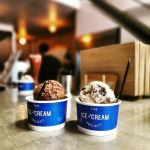 The Science of Ice Cream: Why It’s So Addictive | Explore the Chemistry and Psychology
 Ice Cream Making 101: How to Create the Perfect Ice Cream Flavor
 Best Ice Cream Shops in Fairbanks for Alaska Aurora Borealis Themes
 How to Make Low-Calorie Ice Cream at Home: Healthy and Delicious Recipes