
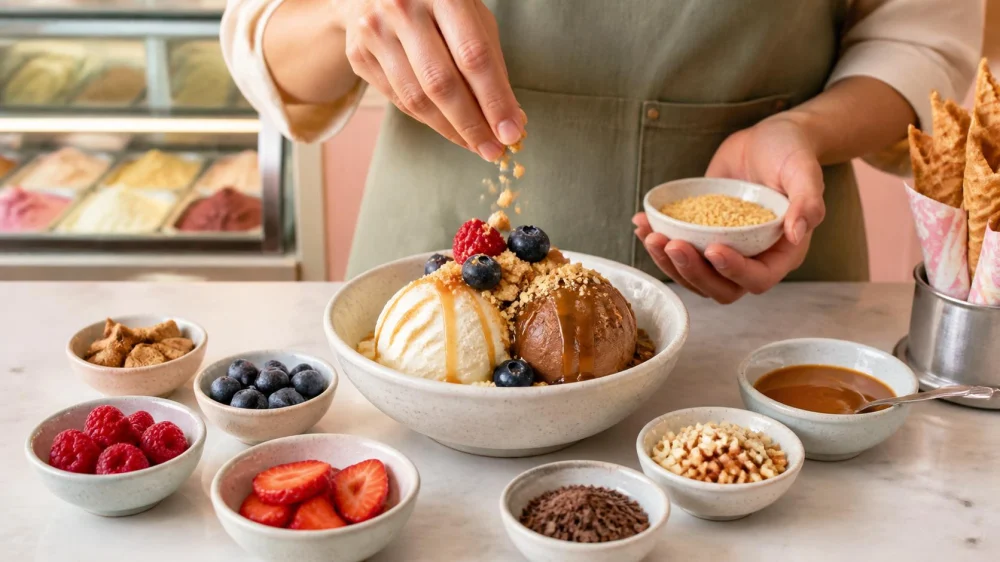
Ice Cream Toppings: Balance Crunch, Sauce, and Scoops
On this page
Quick answer
Choose ice cream toppings by function: one adds crunch, one adds contrast, and one can add sauce or aroma. Start with the base flavor, add fewer toppings than you think, and put crisp ingredients on last. Ask about portions, extra charges, ingredients, and shared utensils before ordering—especially when allergies or dietary restrictions matter.
A topping bar can increase cross-contact risk. A clean-looking bin or scoop does not prove that an ingredient is safe for a specific allergy.

Humdoo Ice Cream Shop & Truck / ice cream flemington nj
FlemingtonHunterdon CountyNew Jersey
20 Stangl Rd, Flemington, NJ 08822, USA
Start with the ice cream
The base determines what the toppings need to do. A rich chocolate scoop may benefit from tart fruit or a salty crunch, while a bright sorbet may need only a small crisp garnish. A flavor already packed with cookies, candy, or swirls can become muddled when several more mix-ins are added.
Take one plain taste when possible. Identify whether you want more texture, acidity, salt, bitterness, fruit, or sweetness, then select the smallest addition that provides it.

Blue Moo Ice Cream / blue moo ice cream
BathNorthampton CountyPennsylvania
2693 Community Dr, Bath, PA 18014, USA
Add texture deliberately
- Crunch: nuts, brittle, cone pieces, cereal, or cookie crumbs.
- Chew: brownie pieces, mochi-style pieces, dried fruit, or candy.
- Fresh contrast: fruit, citrus zest, or a light herb garnish when offered.
- Salty contrast: pretzel pieces or a small amount of salted crumble.
- Soft richness: whipped topping, marshmallow, or cake pieces.
One or two textures usually stay recognizable. Very hard toppings can be uncomfortable against cold teeth; let the bite warm briefly and do not chew ice-hard pieces forcefully.
Use sauce with control
Hot fudge, caramel, fruit sauce, honey, espresso, or nut butter can connect flavors, but too much quickly dominates the base and speeds melting. Ask for sauce on the side if you want control or are sharing with people who prefer different sweetness.
Place a small amount between scoops for layered bites and a little on top for aroma. Very hot sauce can create rapid melting; a warm—not scalding—temperature is easier to eat and handle.
Manage portions and melting
- Choose the cup or cone and number of scoops first.
- Confirm whether toppings are priced individually, by weight, or as a package.
- Select one primary texture and one accent.
- Ask for heavy sauces or wet fruit in a cup when spills are likely.
- Add crisp toppings immediately before serving.
- Eat in shade or indoors and do not leave the dessert at room temperature for later.
Self-service topping portions add up quickly. Use a small amount, taste, and return only if the shop permits refills and you still want more.
Allergens and cross-contact
Toppings commonly contain or contact milk, peanuts, tree nuts, wheat, soy, egg, sesame, and other allergens. Scoops can move between bins, crumbs can fall into neighboring containers, and sauces may share pumps or preparation surfaces.
Tell staff about the allergy before ordering and ask for current ingredient information and their cross-contact process. Do not rely only on a handwritten label, color, or topping name. If staff cannot provide enough information or the setup cannot meet your needs, skip the topping or choose another shop.
Toppings for takeout
Request crisp and wet toppings separately when available. Keep ice cream cold in an insulated carrier, travel directly to a working freezer, and add toppings at serving time. Label containers for different people and keep allergy-specific orders physically separate.
Do not treat a topping cup as shelf-stable without confirmation. Fresh fruit, whipped products, sauces, and cookie dough-style items may need refrigeration or prompt use.
Frequently asked questions
How many toppings should I choose?
Two or three purposeful additions are often enough, though appetite and portion size vary.
Which toppings stay crunchy?
Dry pieces added last stay crisp longest. Sauce and melting ice cream soften them over time.
Are sprinkles allergen-free?
Not necessarily. Ingredients and manufacturing vary, and shared bins can create cross-contact.
Can I ask for toppings on the side?
Many shops allow it, sometimes for a separate charge. Ask before paying.
What works with fruit sorbet?
A crisp cone piece, compatible fresh fruit, or a small contrasting sauce can work; check ingredients first.
Sources and evidence notes
This guide uses basic flavor and texture principles along with ordinary frozen-dessert handling and food-allergy precautions. Ingredient formulas, topping-bar procedures, prices, and serving sizes vary by shop.
For allergy decisions, use current ingredient information and a direct discussion with trained staff about preparation and shared equipment.
Conclusion and next steps
Let the ice cream remain the main flavor. Choose one texture, one contrasting accent, and a controlled amount of sauce; keep crisp pieces dry until serving. Confirm pricing and portions at the counter, and treat allergy questions as a separate safety decision rather than assuming a familiar topping is safe.




 Las Delicias Michel Ice Cream Shop5.0 (8 reviews)
 Baskin-Robbins2.0 (38 reviews)
 Martha's Sno Biz5.0 (1 reviews)
 Jeni's Splendid Ice Creams4.0 (162 reviews)
 Baskin-Robbins3.0 (30 reviews)
 Froster’s Ice Cream4.0 (38 reviews)
 Best Ice Cream Shops in Detroit for Motown Music Themes
 Best Ice Cream Shops in Fairbanks for Aurora Borealis Themes | Local Treats
 How to Make Ice Cream with No Dairy and No Sugar
 How to Make Homemade Gelato with Simple Ingredients: Complete U.S. Guide
 Ice Cream and Gaming: How Video Games Feature Virtual Desserts
 Best Ice Cream Shops in Pierre for South Dakota Buffalo Berry Scoops