
Gelato, Frozen Custard, and Ice Cream: Key Differences
On this page
Quick answer
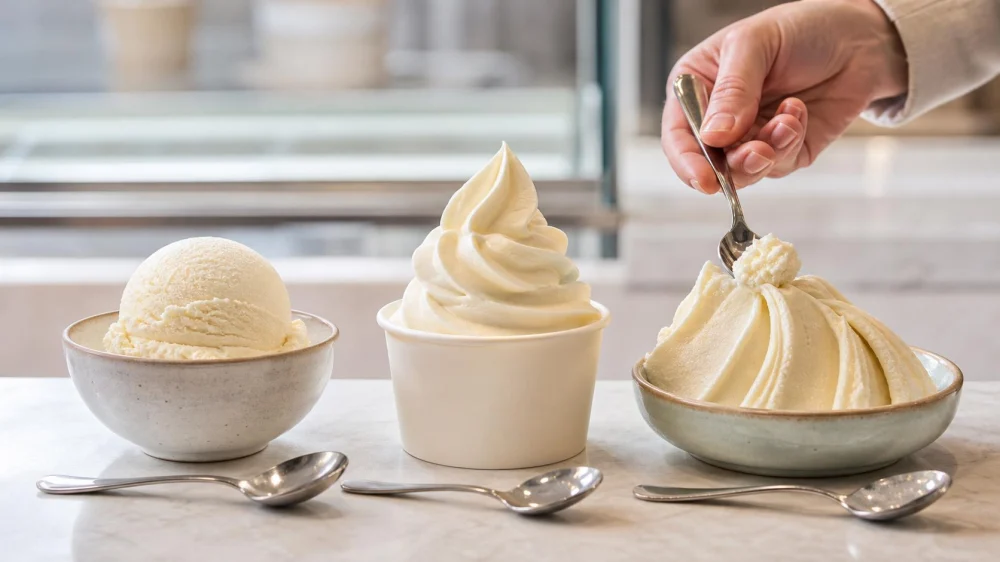
Ice cream is a regulated U.S. frozen-dairy category with broad recipe variety. Frozen custard is closely related but includes a qualifying amount of egg-yolk solids under the standard. Gelato is commonly an Italian-style frozen dessert churned with less incorporated air and served somewhat warmer for a dense, soft texture, but U.S. recipes and naming vary. Check the actual ingredient and allergen information.

Graeter's Ice Cream / graeter's buttermilk
Fort MitchellKenton CountyKentucky
301 Buttermilk Pike, Fort Mitchell, KY 41017, USA
Practical definitions
A standard of identity is a legal description for what a food sold under a regulated name must contain or how it is composed. U.S. federal frozen-dessert standards cover ice cream and frozen custard, while “gelato” is often used as a style term in American shops.
- Ice cream: A frozen dairy dessert made from a pasteurised mix with milk-derived ingredients, sweetener and permitted flavouring or inclusions.
- Frozen custard: An ice-cream-style product distinguished by the level of egg-yolk solids required under the applicable standard.
- Gelato: A style commonly associated with dense body, lower overrun and warmer service, but the exact dairy, egg and fat formula is not universal across U.S. shops.
Compare ingredients
All three may contain milk and sweeteners. Ice cream can include cream, milk solids, stabilisers, emulsifiers, flavours and inclusions. Frozen custard includes egg yolk as a defining component, producing emulsification and a characteristic richness.
Gelato recipes often use proportionally more milk and less cream than some American ice creams, and some flavours use egg while others do not. Never infer “egg-free,” “lower fat,” or “lighter” from the word gelato alone.

Lighthouse Strollo's Homemade Italian Ice / lighthouse strollo's homemade italian ice
Middletown TownshipMonmouth CountyNew Jersey
83 Leonardville Rd, Belford, NJ 07718, USA
Air, temperature, and texture
Overrun is the increase in volume caused by air incorporated during freezing. A lower-overrun product feels denser because less air occupies each scoop. Churning equipment, recipe solids, stabilisation and service technique all influence the result.
- Ice cream: Can range from light and airy to dense and premium; usually held firm enough for storage and scooping.
- Frozen custard: Often made fresh in a continuous freezer and served soft and dense, though packaged versions also exist.
- Gelato: Commonly churned with lower overrun and displayed or served at a temperature that makes it soft and elastic.
Serving temperature changes perceived softness even when recipes are similar, so one sample cannot define an entire category.
How flavour perception differs
Warmer service can release aromas readily and make gelato flavours seem immediate. Dense texture can place more product in each spoonful. Egg yolk may add body and roundness to frozen custard. Higher fat can carry flavour and create richness, but can also influence how quickly some flavours appear.
Quality depends on balance, freshness, texture and ingredient handling rather than category alone. A well-made scoop of any style can outperform a poorly stored or overly crystallised example of another.
Which style should you choose?
- Choose ice cream for the widest range of formats, mix-ins, firmness and packaged options.
- Choose frozen custard when you want a smooth, egg-enriched profile and the shop can explain the recipe and freshness.
- Choose gelato for a dense, softly served texture and flavours designed for that serving temperature.
- Choose none by name alone when allergies, dietary needs or nutrition goals matter; inspect the exact product information.
Labels and allergens
Milk is common across these dairy desserts, and frozen custard contains egg. Gelato may contain either or both and can include nuts, wheat, soy, sesame or other allergens through flavours and mix-ins. Shared scoops, display pans and equipment can create cross-contact.
Ask the shop to check the current ingredient or allergen record for the specific flavour and batch. A “vegan gelato” or non-dairy frozen dessert has a different base but may still share equipment. Do not treat colour, flavour name or staff memory as an allergen guarantee.
Side-by-side tasting checklist
- Choose comparable simple flavours, such as vanilla or chocolate.
- Observe serving firmness and how the scoop holds its shape.
- Notice density and airiness without declaring one automatically better.
- Let a small spoonful warm briefly in the mouth and note aroma release.
- Compare creaminess, egg richness, sweetness and aftertaste.
- Ask how the product is made and served, then compare that explanation with your experience.
Limitations and important notes
Recipes, labels and service styles vary by manufacturer, shop and jurisdiction. This guide describes common U.S. usage and does not determine the legal classification of a specific product. The package label and current shop documentation are controlling.
Frozen desserts are perishable. Keep takeaway products frozen and discard products with unsafe time-temperature history. Nutrition varies by serving size and recipe; category names do not establish calorie, sugar or saturated-fat content.
Frequently asked questions
Is gelato always lower in fat than ice cream?
No. Many recipes follow that pattern, but it is not a safe universal assumption. Check the nutrition and ingredient information for the product.
Does all gelato contain eggs?
No. Some flavours and bases use egg and others do not. Ask for the actual allergen record.
Why does gelato taste softer?
It is commonly served warmer and with lower overrun, both of which can produce a softer, denser experience.
Is frozen custard the same as soft-serve?
No. Soft-serve describes a serving format and texture, while frozen custard refers to a formulation that includes qualifying egg-yolk solids.
Which one is healthiest?
No category wins automatically. Compare serving size, ingredients, nutrition, allergies and how the dessert fits your overall diet.
Sources and evidence notes
The FDA's standards of identity overview links to the federal frozen-dessert standards in 21 CFR Part 135. Those rules establish legal composition for standardised names; individual labels and shop recipes remain necessary for nutrition and allergen decisions.
Next steps
Choose one simple flavour offered in two styles and ask the shop about base, egg, churning and serving temperature. Verify allergens before ordering, then use the tasting checklist. Let texture and flavour—not marketing shorthand—guide your next scoop.


 What's The Scoop4.0 (389 reviews)
 Dairy Queen4.0 (578 reviews)
 Pop's Old Fashion Ice Cream Co4.0 (825 reviews)
 Praline's Cafe4.0 (137 reviews)
 The Bold Face Dairy Bar4.0 (228 reviews)
 Dre's Water Ice and Ice Cream (Mobile Truck)4.0 (54 reviews)
 How to Make Ice Cream in 10 Minutes or Less | Ice Cream Shop
 Best Ice Cream Shops in St. Louis for Missouri Gooey Butter Cake Scoops
 Best Ice Cream Shops in Philadelphia for Liberty Bell Shaped Cones | Ice Cream Shop
 Comparison of Low-Calorie Ice Cream Brands like Halo Top and Nick’s
 Ice Cream Making 101: Everything You Need to Know to Get Started
 Ice Cream and Memes: The Internet’s Favorite Frozen Dessert Jokes