
Ice Cream Shop Allergy Questions: Ingredients and Cross-Contact
On this page
Quick answer
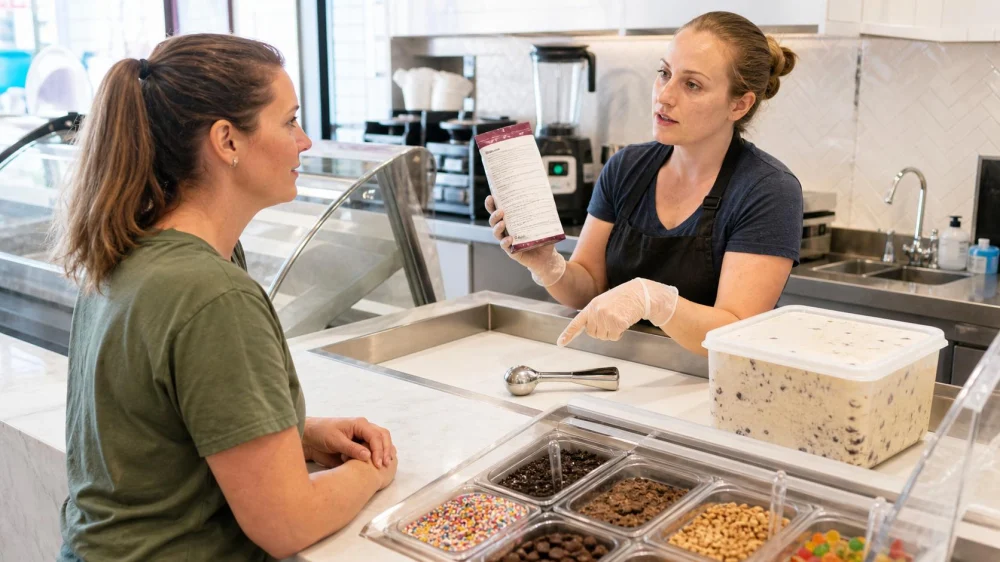
Tell ice cream shop staff the exact food allergy before ordering and ask a manager or trained employee to check current ingredient labels and the preparation process. Discuss base flavors, mix-ins, toppings, cones, sauces, scoop water, shared freezers, blenders, soft-serve machines, utensils, gloves, counters, and serving mistakes. A dairy-free or nut-free flavor name does not guarantee protection from milk, tree nuts, peanuts, egg, wheat, soy, sesame, or another allergen.
If staff cannot verify ingredients or control cross-contact to the level your medical plan requires, do not order. Carry prescribed emergency medicine and follow your clinician's action plan.

Falls Creamery / little falls creamery
Little Falls TownshipPassaic CountyNew Jersey
11 Paterson Ave, Little Falls Township, NJ 07424, USA
Before ordering
- Visit outside peak time when staff can answer carefully.
- Name the allergen plainly; do not describe it as a preference or mild intolerance.
- Ask for the package label or official ingredient record for every component.
- Check whether recipes, suppliers, or seasonal flavors changed.
- Ask who will prepare the order and how it will be marked and handed off.
- Decide before payment whether the answers meet your personal safety plan.
U.S. packaged-food labeling identifies major allergens, but food placed into a cup or cone after a customer orders does not always carry the same package label. Staff communication and source labels therefore matter.
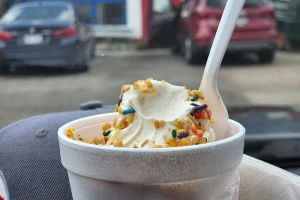
Tastee Twist / tastee twist menu
MilwaukeeMilwaukee CountyWisconsin
2378 N Teutonia Ave, Milwaukee, WI 53206, USA
Map cross-contact points
- One scoop used across multiple flavor tubs
- Scoop rinse water containing residue from prior flavors
- Open toppings falling into neighboring containers
- Cones stored above tubs or handled over the counter
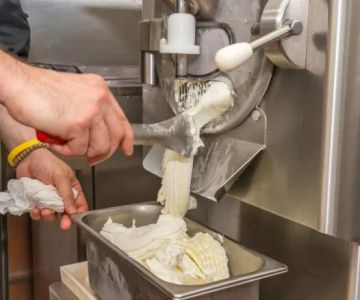
- Shared blender, spindle, soft-serve machine, or waffle-cone equipment
- Gloves, hands, towels, counters, and order tickets touching other foods
- A “safe” tub previously served with a contaminated utensil
- Factory cross-contact noted on an original package
Ask whether staff can use a clean utensil, clean gloves, cleaned and sanitised surface, and a newly opened or protected container when their procedure permits. These steps may reduce risk but cannot create a guarantee when ingredients or shared equipment remain uncertain.
Place and receive the order
Keep the order simple. Repeat the allergen and agreed preparation steps to the person making it. Watch for unrequested garnish, cone, cookie, sauce, sample spoon, or topping. When the order arrives, ask the staff member to identify it and confirm the allergy protocol; do not rely only on cup position or color.
For a child or group order, one informed adult should communicate and collect the allergy order separately. Do not share spoons or taste from another person's dessert.
If a reaction occurs
Stop eating and follow the individual's emergency action plan. Use prescribed epinephrine promptly when the plan indicates it and call emergency services. Do not rely on an antihistamine for anaphylaxis or wait for symptoms to become severe. Keep the cup, receipt, ingredient information, and approximate times without delaying care. Report the event to the shop after medical needs are addressed.
Allergy checklist
- Exact allergen and action plan known
- Emergency medicine current and accessible
- Ingredient labels checked for every component
- Recipe and supplier changes asked about
- Scoops, tubs, toppings, machines, and surfaces discussed
- Preparation steps confirmed with the maker
- Order collected separately and rechecked
- Emergency contact and transport plan ready
Limitations
No restaurant process can promise zero risk. Advisory labels are voluntary and do not measure the amount of allergen. “Vegan,” “plant-based,” “gluten-free,” “non-dairy,” and “lactose-free” answer different questions and may not match an allergy. Individual thresholds and medical plans differ; ask an allergy clinician for personal guidance.
FAQ
Is sorbet always free from milk?
No. Recipes and shared equipment vary. Check the current label and process.
Can wiping a scoop make it safe?
Not reliably. Residue can remain; ask about clean equipment and the shop's full procedure.
Does “may contain” mean only a tiny risk?
It does not quantify likelihood or amount. Follow the medical plan for advisory statements.
Are packaged novelties easier to check?
A sealed product may provide a full label, but verify that packaging is intact and read it each time.
What if the employee seems unsure?
Ask for a manager or choose not to order. Guessing is not an allergy control.
Evidence notes
FDA identifies nine major U.S. food allergens and explains that cross-contact is the unintended introduction of an allergen. CDC restaurant research highlights ingredient records, trained staff, separate or thoroughly cleaned equipment and surfaces, and a response plan as important practices. See FDA food allergy guidance and CDC restaurant allergy practices.
Conclusion
Ingredient checking is only half the conversation. Explain the allergy, trace shared equipment and serving steps, confirm the final order, and walk away when the shop cannot provide the information or controls your plan requires.





 Cherry Top Dairy Bar4.0 (408 reviews)
 Carvel4.0 (9 reviews)
 The Igloo4.0 (400 reviews)
 Dairy Land4.0 (947 reviews)
 Oasis Ice Cream & Grill4.0 (142 reviews)
 Alif Cafe on the Lake George Beach4.0 (173 reviews)
 Ice Cream Menu Texture Terms: Swirls, Chunks, and More
 Best Ice Cream Shops in Albany for New York Apple Orchards
 What Is Funnel Cake Ice Cream and How to Add Fair-Themed Crunch
 Homemade Vanilla Ice Cream Recipe with Fresh Cream and Real Vanilla Beans
 How to Make Ice Cream in 10 Minutes or Less | Ice Cream Shop
 Ice Cream Shop Visit With Kids: A Simple Game Plan