
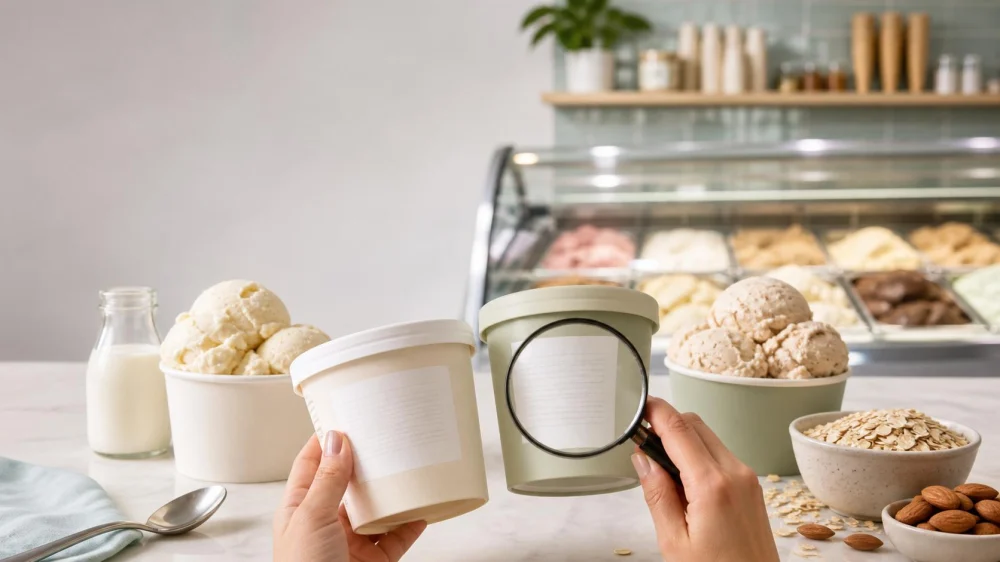
Lactose-Free vs Dairy-Free Ice Cream: Read the Label
On this page
Quick answer
“Lactose-free” and “dairy-free” answer different questions. Lactose-free ice cream may still be made from milk and can contain milk proteins, so it is not automatically safe for a milk allergy. Dairy-free products use no dairy ingredients, but other allergens or cross-contact may still matter. Read the ingredient list, “Contains” statement, advisory wording, and current package every time. At a scoop shop, ask about both ingredients and shared equipment.
Aunt B's / richman's ice cream brigantine nj
BrigantineAtlantic CountyNew Jersey
3307 W Brigantine Ave, Brigantine, NJ 08203, USA
Separate intolerance from allergy
Lactose intolerance is a digestive condition. The National Institute of Diabetes and Digestive and Kidney Diseases explains that it results from lactose malabsorption, when the small intestine makes too little lactase to digest all the lactose consumed. Symptoms may include bloating, gas, diarrhea, nausea, and abdominal pain.
A milk allergy is an immune reaction to milk proteins. It can cause symptoms beyond digestion, and a severe reaction may be life-threatening. The two conditions require different decisions: reducing lactose may help some people with lactose intolerance, while someone with a diagnosed milk allergy generally needs to avoid milk proteins according to their clinician’s plan.
If the reason for avoiding dairy is unclear, do not diagnose it from an ice cream label. Discuss recurring symptoms with a qualified health professional.
MOO-ville ER in Eaton Rapids / mooville eaton rapids mi
Eaton RapidsEaton CountyMichigan
142 S Main St, Eaton Rapids, MI 48827, USA
Understand “lactose-free”
Lactose is the sugar naturally found in milk. A conventional dairy ice cream can be processed with lactase, the enzyme that breaks down lactose, and sold as lactose-free or lactose-reduced. The product can still contain milk, cream, whey, casein, or other milk-derived ingredients.
That distinction matters most for milk allergy. A lactose-free claim does not mean that milk proteins have been removed. Look for “milk” in the ingredient list and in any “Contains” statement. If milk appears, the product is not suitable for a person who must avoid milk protein.
People with lactose intolerance vary in how much lactose they can tolerate. NIDDK notes that many people can consume some lactose without symptoms. Serving size, other foods in the meal, and individual tolerance can influence the experience, so use the plan established with a clinician or dietitian.
Understand “dairy-free”
Dairy-free frozen desserts are commonly based on oat, soy, coconut, almond, cashew, pea, or another plant ingredient. “Dairy-free” is the more relevant front-of-package claim when someone wants to exclude dairy ingredients, but the front label is only the start of the check.
Read the entire ingredient list for milk and milk-derived ingredients. FDA consumer guidance says milk must be identified as a major allergen when it is an ingredient in most packaged foods. The source may appear in parentheses after an ingredient, such as “whey (milk),” or in a nearby “Contains: Milk” statement.
A dairy-free product can contain other major allergens. Almond, cashew, peanut, soy, wheat, egg, and sesame may occur in bases, cookies, brownies, cones, or toppings. Choose based on every allergy that applies, not just milk.
Read the whole package
Use a repeatable package check rather than relying on color, flavor name, a vegan symbol, or a previous purchase:
- Confirm the exact product and flavor; flavors from one brand can use different bases and mix-ins.
- Read the complete ingredient list from start to finish.
- Read the “Contains” statement if one is present.
- Read voluntary advisory statements such as “may contain milk” or “made on shared equipment.”
- Check any cone, sandwich cookie, sauce, and topping separately.
- Repeat the check on every purchase because formulations and suppliers can change.
FDA guidance notes that a “Contains” statement is not mandatory on every package, so the ingredient list still matters. Advisory statements are voluntary and describe possible cross-contact, not an ingredient intentionally added to the recipe.
Ask at the scoop counter
Unpackaged ice cream requires more questions because a display card may not include a full label. Ask staff to check the current ingredient or allergen documentation for the exact flavor, cone, sauce, and topping. Do not rely on visual inspection or a guess based on the flavor name.
For an allergy, ask how scoops, spades, blenders, soft-serve machines, topping bins, and preparation surfaces are shared and cleaned. A clean scoop from the back may reduce one exposure route, but it cannot make a product safe if the flavor itself contains the allergen or if the shop cannot control cross-contact.
If staff cannot verify ingredients or the cross-contact procedure does not fit the person’s medical plan, choose a sealed product with a readable label or do not order.
Compare nutrition and ingredients
Plant-based and dairy-based products can differ substantially in protein, saturated fat, added sugar, and fortification. “Dairy-free” does not automatically mean lower in sugar, calories, or saturated fat. Coconut-based products, for example, can have a different fat profile from oat- or soy-based products.
Compare the Nutrition Facts panel using the same serving size. Check protein, saturated fat, added sugars, calcium, and vitamin D if those nutrients matter to your eating pattern. FDA guidance on plant-based milk alternatives emphasizes that nutrient content varies with the plant source, processing, fortification, and added ingredients.
Texture also changes by base. If allergy safety permits, choose a base and flavor for the desired taste and nutrition rather than assuming one category is universally better.
Limitations and important notes
Labels and food-service practices vary by product and location. This guide cannot determine whether a particular food is safe for an individual allergy, replace medical advice, or guarantee that cross-contact has not occurred.
Anyone with a diagnosed food allergy should follow their allergy action plan and carry prescribed emergency medication. For symptoms such as trouble breathing, throat swelling, faintness, or a rapidly progressing reaction, use prescribed epinephrine as directed and seek emergency care.
Sources and evidence notes
The distinctions and label-reading steps in this guide are based on U.S. federal health information. Product claims and requirements may differ outside the United States.
- NIDDK: Lactose Intolerance
- FDA: Have Food Allergies? Read the Label
- FDA: Milk and Plant-Based Milk Alternatives
Frequently asked questions
Is lactose-free ice cream dairy-free?
Not necessarily. It can be made from milk treated to reduce or break down lactose and can still contain milk proteins.
Is dairy-free ice cream safe for a milk allergy?
Do not decide from that claim alone. Read the full label and advisory wording, then apply the person’s allergy plan and cross-contact requirements.
Does vegan mean allergen-free?
No. A vegan frozen dessert may contain peanut, tree nut, soy, wheat, sesame, or another allergen and may be made on shared equipment.
Can a lactose-intolerant person eat regular ice cream?
Tolerance differs. Some people can handle a small amount, while others need lactose-free products or lactase. A clinician or dietitian can help individualize the approach.
Should I reread a label for a product I buy often?
Yes. Recipes and manufacturing details can change, so check the current package every time.
Next steps
Identify whether the concern is lactose intolerance, milk allergy, another allergy, or a personal preference. At the freezer, check the exact flavor’s ingredients, allergen statement, advisory wording, serving size, and nutrition. At a shop, add questions about shared utensils and equipment. If the answer remains uncertain and a medical allergy is involved, skip the product.




 The Goody Bag5.0 (3 reviews)
 KURIMU4.0 (777 reviews)
 Dippin' Dots3.0 (393 reviews)
 Campbells Frozen Custard4.0 (326 reviews)
 Dumsers Dairyland Factory4.0 (116 reviews)
 The Station on Twenty-Two4.0 (135 reviews)
 Ice Cream and Health: Real Benefits of Frozen Desserts Explained
 Ice Cream and Archaeology: Ancient Tools and Methods for Freezing
 Ice Cream and Education: Online Courses for Becoming an Ice Cream Chef
 Best Ice Cream Shops in Cleveland for Great Lakes Inspired Creations: Explore Unique Flavors
 Best Ice Cream Shops in Seattle for Coffee-Infused Scoops
 Best Ice Cream Pairings with Your Favorite Pie | Top Dessert Combinations