
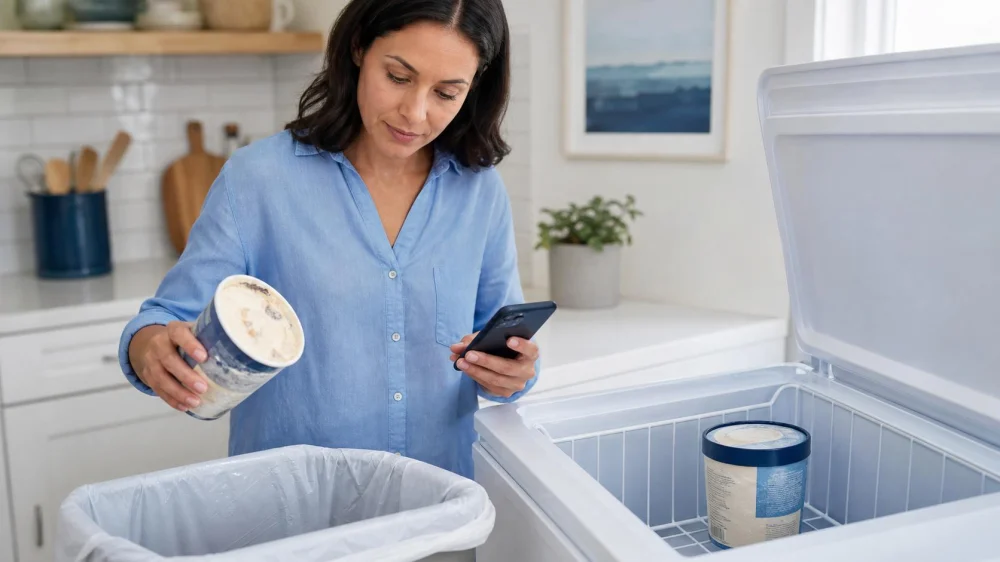
Melted Ice Cream: When to Refreeze and When to Discard
Quick answer: Put normally scoop-softened ice cream back in a working freezer promptly, before it becomes runny or warm. Discard ice cream that is soft or melted after a power outage, has an unknown time-temperature history, sat above 40°F for two hours or more, or contacted raw-food drips. USDA’s outage chart specifically says to discard ice cream and frozen yogurt rather than refreeze them. Never taste-test for safety.
“Soft enough to scoop” and “melted” are not the same condition. The safest choice depends on why the product warmed, how long it was out, its temperature, whether the container stayed clean, and current official guidance.
1. Identify Why the Ice Cream Softened
Common causes include normal serving time, a long drive, grocery delivery delay, a freezer door left open, appliance failure, or a power outage. Do not combine all of these into one rule. A pint that softened briefly on the counter during scooping has a different history from one discovered liquid after an overnight failure.
Ask who handled it, when it left reliable freezing, whether the lid stayed closed, and whether the freezer maintained temperature. If the history is unknown, do not invent a safe timeline from texture alone.

Abbotts Frozen Custard / abbotts henrietta
HenriettaMonroe CountyNew York
2755 E Henrietta Rd, Henrietta, NY 14467, USA
2. Record Time and Temperature
Use an appliance thermometer in the freezer and a clean food thermometer when item-level guidance calls for it. A normal freezer should maintain 0°F or below. The general USDA rule is to discard perishable food held above 40°F for more than two hours, or one hour when the surrounding temperature is above 90°F.
Do not use a cold container wall, visible frost, smell, or the presence of a firm center as proof that every part stayed safe. Time and verified temperature are stronger evidence.

Kilwins Ice Cream - Chocolate - Fudge / kilwins naperville
NapervilleDuPage CountyIllinois
36 W Jefferson Ave, Naperville, IL 60540, USA
3. Use the Special Outage Rule
During an outage, keep the freezer closed. A full freezer may hold temperature for about 48 hours and a half-full freezer for about 24 hours if unopened, but actual conditions vary. Check the appliance thermometer and each food after power returns.
Many frozen foods can be refrozen when they still contain ice crystals or are 40°F or below. Ice cream and frozen yogurt are exceptions in USDA’s emergency chart: the listed action is discard, even in the “still contains ice crystals and feels cold” column. Follow that item-specific guidance instead of the general refreezing rule.
4. Handle Routine Serving Safely
Remove the pint only when bowls and toppings are ready. Use a clean scoop, serve, replace the lid, and return the container promptly to the coldest stable part of the freezer. Avoid repeated long countertop cycles.
If the surface is merely easy to scoop and the product remained cold and clean during a short serving period, prompt return protects quality. If it has become runny, warm, foamy, separated, or its history is uncertain, discard it rather than trying to “save” it.
5. Check a Warm Delivery or Trip Home
At pickup, choose frozen food last and use an insulated bag or cooler for a long or hot trip. At delivery, inspect promptly. Photograph a leaking, collapsed, or fully softened container and contact the retailer before discarding when a refund is relevant.
Do not leave a delivery on a porch. If you cannot verify that the product remained properly cold, request store or manufacturer guidance and choose the conservative food-safety decision. A seal shows tamper status, not temperature history.
6. Look for Contamination, Not Just Melting
Discard any ice cream contacted by raw meat, poultry, or seafood juices; flood water; dirty utensils; broken packaging; or a shared scoop with an undeclared allergen. Refreezing cannot undo contamination.
Keep the lid rim clean and avoid eating directly from a container that will be shared or stored. Use a clean scoop each time. For an allergy, cross-contact can happen even while the product stays frozen; follow label and manufacturer information.
7. Understand What Refreezing Can and Cannot Do
Freezing does not sterilize food or reverse bacterial growth that occurred during unsafe warming. It also changes ice-crystal structure. Melted ice cream commonly refreezes coarse, icy, separated, or shrunken rather than returning to its original smooth texture.
Do not blend, bake, or boil questionable melted ice cream as a rescue method. When official guidance says discard, changing the recipe does not reset its history.
8. Discard Without Creating Another Hazard
Close or bag the container so it will not leak, then place it in the appropriate household trash. Keep it out of reach of children, pets, and wildlife. Do not pour a large amount down a sink or toilet, where fats, solids, and cold product can contribute to plumbing problems.
Clean leaked product from freezer surfaces according to the appliance manual, wash hands, and sanitize food-contact tools. If raw juices or flood water were involved, follow official contamination cleanup guidance.
9. Check the Freezer Before Replacing the Pint
Confirm the appliance can hold 0°F or below. Check that the door seals, interior vents are clear, controls were not changed, and frost is not preventing closure. A freezer packed too tightly around vents or left nearly empty may recover unevenly.
Move replacement frozen food only after stable temperature is verified. Contact a qualified appliance technician for repeated warming, unusual noise, a hot exterior area, damaged cord, sparking, or failure to recover. Do not use an extension cord or electrical repair that the manufacturer does not authorize.
10. Prevent Repeat Melting
Keep an appliance thermometer visible, store ice cream away from the door, and mark the purchase date. During serving, portion quickly and return the pint. For transport, use frozen gel packs around—rather than only below—the sealed container.
During an outage, record the start time and keep the freezer closed. Group frozen packages and use safe ice or alternate cold storage when official guidance recommends it. Afterward, evaluate ice cream separately from meats, vegetables, or bread because item-specific discard rules differ.
Decision checklist: identify the cause; verify time and temperature; follow the USDA ice-cream outage rule; return only briefly scoop-softened, clean product promptly; discard runny, warm, contaminated, or uncertain product; never taste-test; and verify the freezer before restocking.
Evidence notes: USDA’s emergency food-safety chart lists ice cream and frozen yogurt as discard items whether still icy or fully thawed after a power interruption. Its freezing guidance also advises disposing of soft or melted ice cream and explains the time, temperature, and contamination rules for other frozen foods.
This article provides general U.S. food-safety information. Follow the current product label, manufacturer instructions, USDA/FoodSafety.gov guidance, and local emergency advice.




 Dairy Queen (Treat)4.0 (442 reviews)
 Praline's Ice Cream of Plainville, CT4.0 (335 reviews)
 Amorino Gelato4.0 (997 reviews)
 Dairy Queen (Treat)4.0 (403 reviews)
 Brunswick Cream4.0 (56 reviews)
 Smoothies On 7 Mile Dairy Bar4.0 (561 reviews)
 What Is Margarita Ice Cream and How to Add Tequila and Salt
 What Is Neapolitan Ice Cream and Why the Three Flavors Together
 Why Ice Cream is the Perfect Dessert for Every Season
 How to Make Ice Cream with Feijoa for a New Zealand Pineapple Guava Twist
 What Is Carrot Cake Ice Cream and How to Add Cream Cheese Swirls
 Ice Cream and Sustainability: How Brands Are Reducing Environmental Impact